A father’s personal loss turns into a nation’s gain: How Taraasha Foundation is helping families with rare diseases
Oct 24, 2026
VMPL
New Delhi [India], October 24: Some losses leave a silence words cannot fill; grief lingers. In a world of illnesses, rare illnesses exist, and Fucosidosis is one of them.
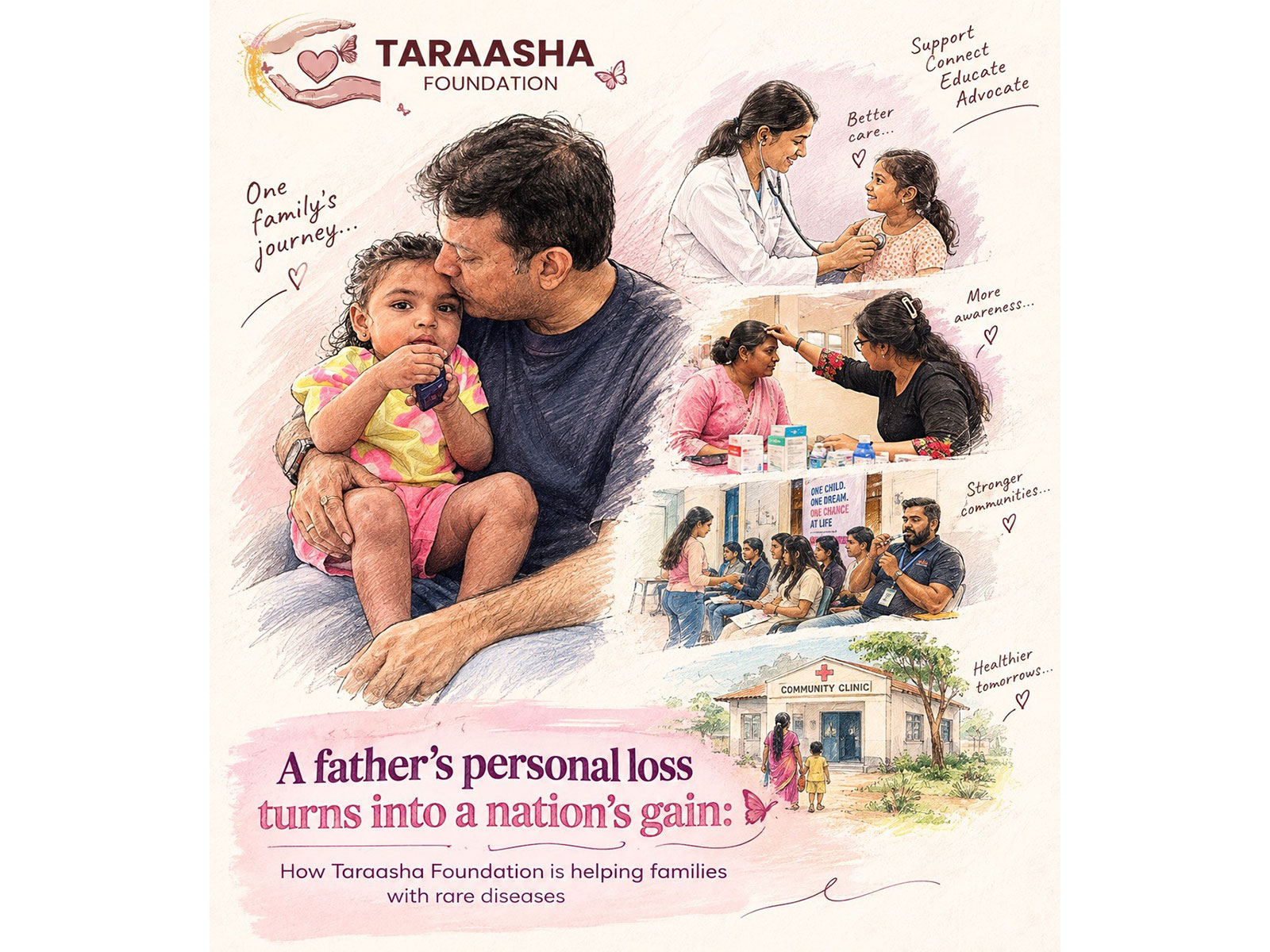
When four-year-old Taraasha Bhargava lost her battle with Fucosidosis, her father did not grieve over her loss but also turned that grief into a lifeline for families facing this life-wrecking disease. Her battle was brief. She lives on through a cause: the Taraasha Foundation.
Life is unpredictable and sometimes very hard. When families learn that their child has been diagnosed with a disease, they feel fear and uncertainty. Families must endure tests, medical bills, and medicines that slowly become a regular part of families' lives. Beyond these troubles, families face another struggle: the emotional isolation families experience while living with diseases.
Life-changing diagnosis: Taraasha Bhargava was one and a half years old when certain changes became very obvious. Delays in development, difficulty in speaking, challenges in walking, and eventually swallowing food became a struggle.
After consultations with doctors and therapists, the devastating news arrived. Taraasha was diagnosed with Fucosidosis, a rare genetic disorder. Finding suitable treatment for Taraasha was itself a long and difficult journey, with more than a year spent searching for a stem cell donor. After she underwent a bone marrow transplant, the family faced further challenges as essential medicines and injections were unavailable in India, forcing them to source these from abroad amid uncertain pricing. Despite Karan Bhargava’s family’s extensive background in healthcare, navigating these barriers remained a struggle. Tragically, Taraasha passed away in the hospital on 18 September 2025, while undergoing treatment.
Early diagnosis and timely treatment are crucial for children living with rare genetic diseases, including Lysosomal Storage Disorders. Recognising symptoms early, receiving the right medical guidance, and accessing appropriate treatment as soon as possible can help families make informed decisions and improve a child’s quality of life. No family should have to lose precious time navigating a complex healthcare system without clear guidance, access to specialists, or information about available treatment options. Taraasha’s journey underscores the urgent need to strengthen early diagnosis, awareness, and access to specialised care for every child affected by a rare disease.
In her memory, Karan Bhargava founded the Taraasha Foundation, turning his loss and grief into a mission to support other children and families navigating the difficult world of rare diseases. The motto is: No home should ever have to face Fucosidosis and LSD alone. Supporting patients and families living with Lysosomal Storage Disorders.
Lysosomal Storage Disorders: An introduction
Lysosomal disorders are a group of 70 rare, inherited metabolic disorders caused by genetic mutations that result in deficient and absent lysosomal enzymes. In these diseases, some internal materials, namely toxins, accumulate in your body and cannot be flushed out, resulting in various metabolic disorders, one of them being LSD. Various symptoms help identify the disease. Mostly, children can develop this if one parent has mutated genes. The most highlighted ones are:-
- Changes in your skeletal muscle
- Abnormally large organs (visceral): abdomen, kidneys, liver, pancreas, spleen, or stomach can be enlarged.
- Delay in body development, which can worsen over time
What is Fucosidosis? A thorough understanding
Fucosidosis is a genetic disorder that falls under a group of conditions called Lysosomal Storage Disorders. It is a genetic disorder in which the body cannot produce the enzyme needed to break down certain materials. When this key enzyme is defective or missing, the body cannot break down those substances properly. Over time, these substances build up. Damage the body and organs. In some cases, the disease can damage the brain and nervous system.
Symptoms -Parents should look out for
Symptoms of this group of diseases can appear in infancy or early childhood. They can vary in nature. Can be mistaken for developmental disorders, but parents should be cautious.
i. Delay in Development – An unusual delay in sitting, walking, standing or walking can be an early sign.
ii. Loss of acquired skills – In some children, skills they once had, like speaking, can start to fade, and that can be a warning sign.
iii. Impaired swallowing – In children, difficulty in swallowing can be seen, and parents should not ignore this sign and should seek medical help immediately.
iv. Stiff muscles and limited mobility – Changes in muscle tone can alter how muscles feel, which can affect how well muscles work and can limit mobility.
v. Repeated chest infections – Some children can suffer repeated chest infections. This can be a warning sign for parents.
vi. Seizures and neurological problems – When the disease progresses untreated, the child may have seizures and neurological problems.
vii. Growth, bone or organ-related changes – Affected children have bone growth and bone changes and can have an enlarged spleen and liver.
The Larger Challenge: Rare Diseases, Unequal Access
Fucosidosis is one of the 70 lysosomal storage disorders identified worldwide. Each disorder is rare by itself. Together they pose a problem for families and healthcare systems.
In India, families affected by such diseases often cannot find specialists who know them. They also struggle to access confirmatory tests, learn about treatment options, and afford medicines. Sometimes families must send samples abroad, which causes delays and adds costs. Limited treatment availability and high prices are also obstacles.
Beyond the problems, an emotional weight often hides. Parents face uncertainty, many hospital visits, and hard choices while caring for children. Without a support network, the journey can feel even lonelier.
For Karan, these were not health issues.
He faced brutal realities with a rare disease and had a life wrecking experience.
Taraasha Foundation: Turning Grief into Purpose
Founded in loving memory of Taraasha, the Taraasha Foundation works to close gaps between diagnosis, medical advice, treatment access, and emotional help.
The Taraasha Foundation does more than awareness campaigns or financial aid. It aims to build a support system families can rely on as they navigate life with a disease.
The Foundation’s initiatives include:
Patient and family guidance: Helping families understand their condition, navigate care routes, and examine options.
Caregiver connections: Building a community where families can share experiences, information, and emotional support.
Disease awareness and education: Making information about disorders easier for the public, health care professionals, and policymakers to find.
Treatment and medicine access support: Guiding families toward resources and helping families navigate medicine-related challenges.
Advocacy: Supporting work with institutions and pushing for earlier diagnosis, better access to therapies, newborn screening, and fairer medicine prices.
Through enrolment, counseling, clinical trial updates, and community links, the Taraasha Foundation aims to stay with families after the diagnosis.
Its vision is simple yet strong: no family should have to face Fucosidosis or another Lysosomal Storage Disorder.
A Daughter’s Legacy, A Father’s Promise
Grief does not always find healing. Sometimes it finds a way to serve.
For Karan Bhargava, the Taraasha Foundation is a promise that his daughter’s life will keep making a difference. Her story reminds families that children with misunderstood conditions and parents still looking for answers exist.
The Taraasha Foundation cannot erase the pain of a diagnosis. It can help families find reliable information, explore care options, and connect with others who understand their journey.
That is where the importance lies.
To learn more or seek help, visit www.taraashafoundation.com to support its mission. Families can contact the Taraasha Foundation at [email protected]
Because no family should have to navigate the unimaginable. No child should be forgotten simply because its disease is rare.
(ADVERTORIAL DISCLAIMER: The above press release has been provided by VMPL. ANI will not be responsible in any way for the content of the same.)