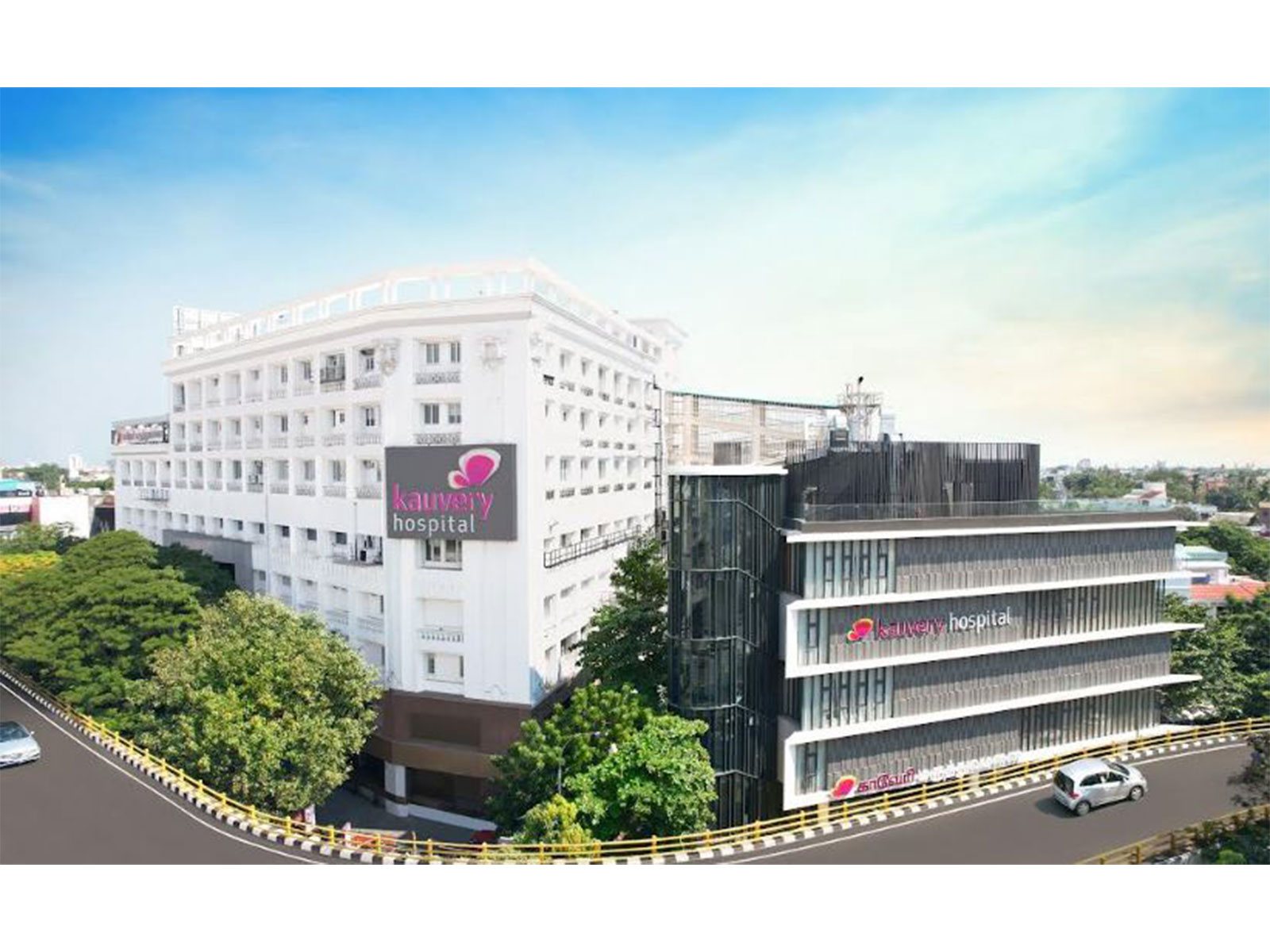
Single-Session Dual Arrhythmia Ablation: Kauvery Hospital Achieves Breakthrough in High-Risk Cardiac Care through Cryoablation and RF ablation
Apr 04, 2026
NewsVoir
Chennai (Tamil Nadu) [India], April 4: In a remarkable clinical achievement, Kauvery Hospital, Alwarpet, successfully treated a 71-year-old man with multiple co-morbidities and two potentially life-threatening cardiac arrhythmias using image-guided, catheter-based electrophysiological interventions with high-density 3D electroanatomical mapping and energy-based ablation technologies.
The patient had a complex medical background, including diabetes, hypertension, chronic kidney disease, heart failure, prior coronary artery bypass graft (CABG) surgery, and an implantable cardioverter defibrillator (ICD). He presented with two critical arrhythmias:
- Atrial Fibrillation (AF): A common supraventricular arrhythmia associated with a significantly increased risk of stroke
- Ventricular Tachycardia (VT): A potentially fatal ventricular arrhythmia, for which the patient had already received a life-saving ICD shock
Simultaneous management of both AF and VT is highly challenging. Conventionally, such combined procedures can extend up to six hours and often necessitate general anesthesia with endotracheal intubation and mechanical ventilation--posing substantial risk in elderly patients with multiple co-morbidities.
Following a comprehensive multidisciplinary evaluation involving cardiac electrophysiology and cardiac anesthesia teams, the team elected to perform a single-session, dual arrhythmia ablation under conscious sedation, thereby minimizing procedural risk.
The patient successfully underwent:
- Cryoballoon ablation for atrial fibrillation
- Radiofrequency (RF) substrate-based ablation for ventricular tachycardia
Cryoablation utilizes controlled cryothermal energy to achieve precise pulmonary vein isolation by selectively targeting arrhythmogenic foci, while preserving adjacent myocardial tissue.
The combined procedure was completed safely within three hours using high-resolution 3D electroanatomical mapping systems, real-time intracardiac navigation, and fluoroscopy-minimizing techniques. Vascular access was obtained percutaneously via the femoral route, eliminating the need for surgical incisions or mechanical ventilation.
The patient had an uneventful recovery and was discharged the following day.
Dr. Deep Chandh Raja, Director of Cardiac Electrophysiology at Kauvery Hospitals, said, "Innovative technologies such as cryoablation and fast high-density 3D mapping systems allow us to treat complex and high-risk arrhythmias with greater precision and efficiency. Even in elderly patients with multiple co-morbidities, we can now offer definitive rhythm correction with minimal physiological stress and faster recovery."
Dr. Aravindan Selvaraj, Co-founder and Executive Director of Kauvery Group of Hospitals, added, "Kauvery Hospital, Chennai, is focused on bringing international standards of cardiac care to patients in India through advanced technology, expert clinical teams, and evidence-based treatment protocols. Our aim is to ensure that even highly complex heart rhythm disorders can be treated here with the same precision and confidence patients would expect from leading global centres."
This case underscores how advancements in cardiac electrophysiology and minimally invasive technologies are transforming the treatment of complex arrhythmias--making sophisticated care safer, faster, and more accessible, even for high-risk elderly patients.
(ADVERTORIAL DISCLAIMER: The above press release has been provided by NewsVoir. ANI will not be responsible in any way for the content of the same.)