From Salary to Security: How Employee Protection Has Evolved in India Over 20 Years
Aug 24, 2026
VMPL
New Delhi [India], August 24: From provident fund and gratuity to group health, life, accident and digital benefits, India's employee-protection landscape has changed dramatically. The evolution is also transforming the role of insurance brokers from policy intermediaries into employee-risk advisers.
Twenty years ago, employee security in India was largely understood through salary, provident fund, gratuity, leave and, in some organisations, medical insurance.
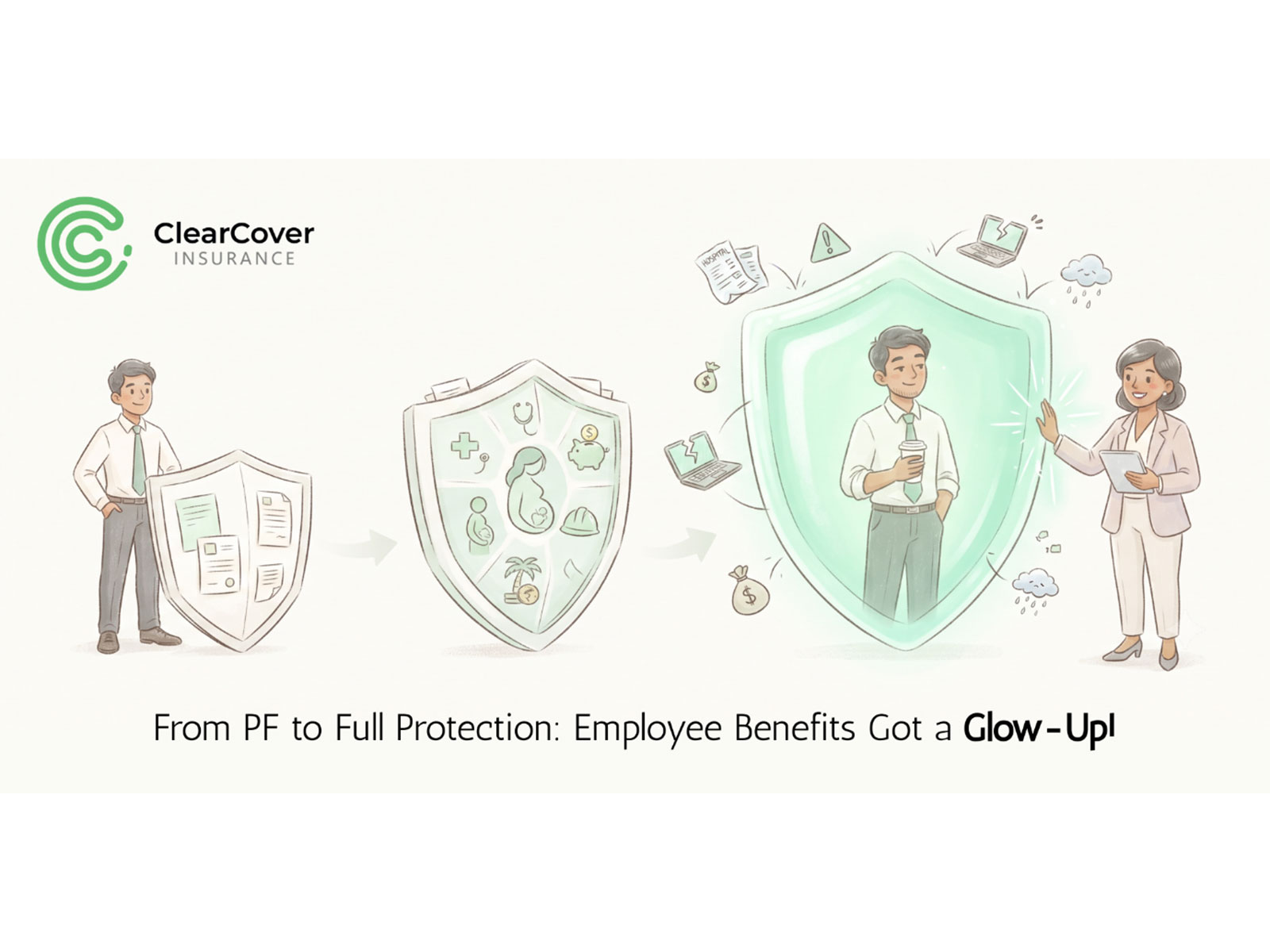
Today, employee protection is much broader. It can include health insurance, life insurance, personal accident cover, maternity benefits, retirement savings, gratuity, workplace safety, social security and claims support.
India's social-protection coverage increased from 19% in 2015 to 64.3% in 2025, according to ILOSTAT data cited by the Ministry of Labour and Employment. More than 94 crore people were covered by at least one social-protection benefit in 2025.
But greater coverage raises an important question:
Do employees actually understand the protection available to them?
That question is increasingly putting insurance brokers at the centre of the employee-benefits conversation.
From Statutory Benefits to Comprehensive Protection
In the mid-2000s, employee protection was primarily associated with statutory frameworks such as EPF, ESI and gratuity. Over time, the definition expanded.
The Maternity Benefit Act reforms increased eligible maternity leave to 26 weeks, while the POSH Act, 2013 created a formal framework for preventing and addressing sexual harassment at workplaces.
The implementation of India's four Labour Codes in 2025 further consolidated the country's labour-law framework, bringing 29 Central labour laws under four broad Codes covering wages, industrial relations, social security and occupational safety and health.
For companies, employee protection is increasingly connected with both compliance and risk management.
Why Group Health Insurance Matters
Healthcare is one of the most important components of modern employee benefits.
While ESI continues to provide benefits to eligible workers, many corporate organisations also provide employer-sponsored group health insurance.
A group health insurance programme can provide financial protection against eligible hospitalisation and healthcare expenses, depending on the policy structure.
However, the headline sum insured is only one part of the story. Employees should understand:
- Who is covered
- Whether parents are covered
- Maternity and newborn benefits
- Waiting periods
- Pre-existing disease provisions
- Room-rent limits and co-payment
- Cashless hospitals
- Exclusions
- Claim procedures
For employers looking to structure employee-focused insurance programmes, ClearCover's Group Health Insurance solutions provide an example of how corporate health benefits can be designed around workforce requirements.
The larger lesson is simple: insurance coverage is valuable only when employees understand how to use it.
Having Insurance Does Not Always Mean Being Fully Protected
Consider an employee who knows that their employer provides ₹5 lakh of group health insurance.
They may still not know:
Are my parents covered? Is maternity covered? Which hospitals are cashless? Is there a room-rent restriction? What happens if I leave the company? How do I raise a claim?
These questions reveal an important gap in corporate insurance.
The problem is not always a lack of insurance. Sometimes it is a lack of awareness.
This is where insurance brokers can create value beyond policy placement through employee communication, benefit explanations, claims assistance and periodic policy reviews.
Life and Accident Protection
Health insurance protects employees from healthcare-related financial risks. But unexpected death or serious accidents can create significant financial challenges for families dependent on a single income.
This is where Group Term Life Insurance and Group Personal Accident Insurance can become important components of an employee-benefit programme.
Group Personal Accident insurance can provide protection against accidental death and specified disabilities, subject to policy terms.
For organisations reviewing their employee-protection programmes, ClearCKover's Group Personal Accident Insurance solutions demonstrate how accident-related risks can be incorporated into a broader corporate insurance strategy.
The Changing Role of the Insurance Broker
The traditional perception of an insurance broker was simple:
Find insurer → Compare premium → Place policy → Renew policy.
Today, corporate insurance demands considerably more.
An employee-benefits broker can support:
- Workforce risk assessment
- Group health, life and accident insurance
- Coverage-gap analysis
- Insurer comparison and premium negotiation
- Claims support
- Employee awareness
- Policy administration
- Renewal strategy
The broker increasingly becomes the connection between HR, employees, insurers and risk management.
Technology Is Changing Employee Benefits
Digital transformation is making employee benefits more accessible. Employees increasingly expect to access their insurance information without depending entirely on HR.
Digital platforms can provide access to:
- E-cards and policy documents
- Coverage information
- Claim status
- Dependant details
- Hospital networks
- Claims assistance
For example, ClearCover Insurance provides technology-enabled employee-benefit and insurance-management solutions, including HR and employee portals designed to make policy and claims information more accessible.
The goal is simple: employees should be able to access the right information when they need it most.
From CTC to Total Employee Security
For years, companies have discussed employee compensation through CTC -- Cost to Company.
The next evolution is to think in terms of Total Employee Security:
Salary + PF + Gratuity + Healthcare + Life Protection + Accident Protection + Maternity Support + Workplace Safety + Retirement Security
Employee benefits are no longer simply an HR expense. They can influence employee retention, employer branding, workforce confidence and financial resilience.
India's employee-protection journey has moved from a relatively narrow focus on salary and statutory savings towards a broader ecosystem of financial, medical and workplace protection.
The next challenge is not simply adding more benefits. It is making existing benefits accessible, transparent, understandable and useful.
For employers, employee benefits should not be treated merely as an annual renewal exercise. For employees, understanding their benefits should become as important as understanding their salary.
And for insurance brokers, it means moving beyond policy placement towards becoming long-term employee-risk and protection partners.
The real value of an employee benefit is not the premium an employer pays. It is the financial security an employee receives when life takes an unexpected turn.
About ClearCover Insurance
ClearCover Insurance is an insurance broker focused on corporate insurance and employee-benefit solutions, including group health and group personal accident insurance.
Website: www.clearcover.in
Email: [email protected]
Phone: +91 7676693747
Explore ClearCover: https://www.clearcover.in/
Disclaimer: Insurance coverage, statutory benefits and eligibility vary depending on applicable laws, employee category, organisation, insurer and policy terms. This article is intended for general informational purposes and should not be considered legal or insurance advice.
(ADVERTORIAL DISCLAIMER: The above press release has been provided by VMPL. ANI will not be responsible in any way for the content of the same.)